 Bumbi
How to Sell Courses Online: Package, Price and Sell Your Course
How to package a course around one result, what to charge, how to sell it to people who do not know you yet, and how enrolment runs itself.
Quick answer: To sell courses online, package one clear transformation into a short course, price it on the result, put it behind a checkout that enrols students automatically, and sell it with free teaching first (a webinar, a free lesson, or useful posts). The course does not need to be long. It needs to get students to one result.
You know something people want to learn, and a course feels like the natural next step. Then the questions pile up. How long should it be? What should it cost? Where do the videos live? How do students get in after they pay? And who will actually buy it?
This guide answers each of those for selling courses as a creator: how to package it, how to price it, how to sell a course to people who do not know you yet, and the tools that make enrolment run on its own.
Package the course around one result
The courses that sell promise one specific change. "Learn photography" is a topic. "Take sharp, well lit product photos with your phone in 7 days" is a result someone will pay for.
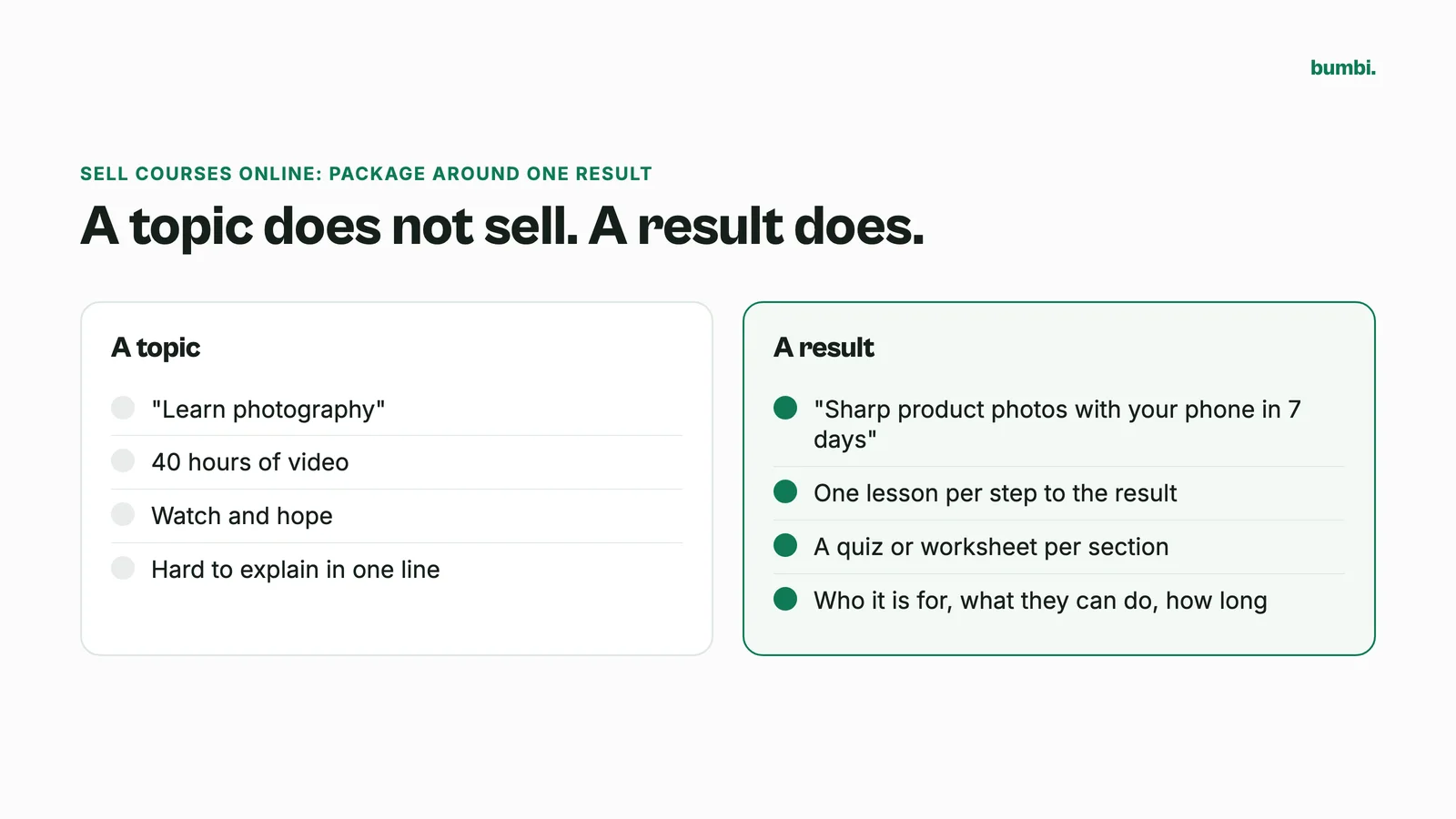
- Write the promise in one sentence: who it is for, what they will be able to do, and how long it takes.
- List the steps between where they start and that result. Each step is a lesson.
- Cut everything else. Students pay to finish, not to watch 40 hours of video.
- Add practice. A quiz, an assignment or a worksheet per section keeps students moving.
If you have not built it yet, start with how to create an online course.
How much should you charge for an online course?
Price on what the result is worth to the student, not on the number of videos.
- A short skills course (a few lessons, one task) can sit at an easy price and sell to a wide audience.
- A complete program that changes someone's income or career can be priced much higher, and usually sells better after a webinar or a video that explains it.
- Add support for a higher tier. The same course plus group calls or feedback on assignments is a natural premium option.
- Monthly access through a membership suits creators who keep adding lessons.
Whatever you charge, make sure buyers in other countries see a price in a currency they use.
How to sell a course: the selling plan
People rarely buy a course from someone they met five minutes ago. Teach first, then sell.
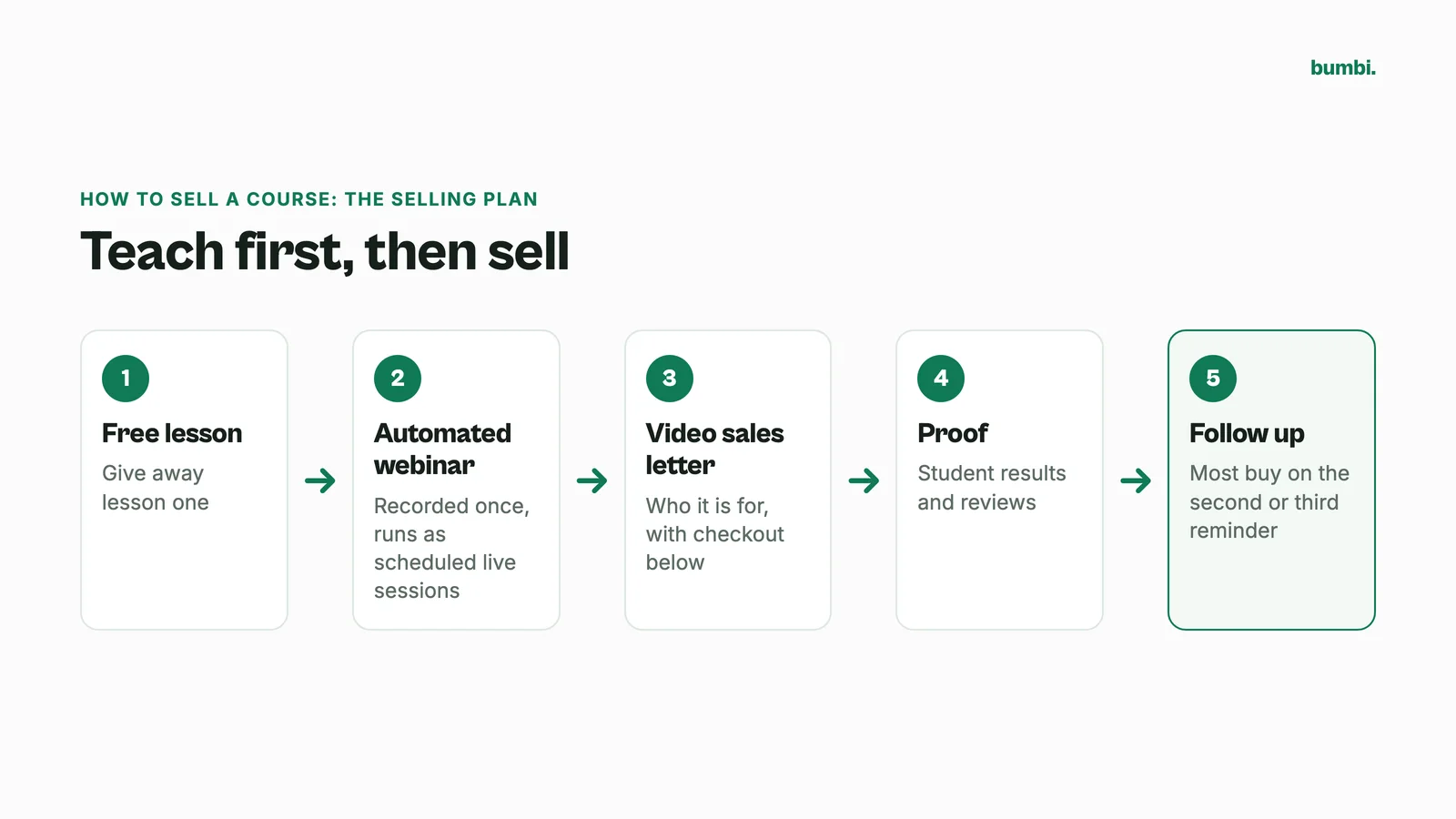
- Free lesson or mini course. Give away lesson one. If it helps, people want lesson two.
- Automated webinar. A 30 to 45 minute class you record once, run as scheduled live sessions, that teaches one useful thing, then offers the course. It runs on a schedule while you do other work. See what a webinar funnel is.
- Video sales letter page. A short video that explains who the course is for and what it changes, with the checkout below.
- Proof. Student results and reviews, as soon as you have them.
- Follow up. Most buyers decide on the second or third reminder, not the first.
What online courses are in demand?
Demand follows problems people need solved soon: getting a job, earning more, passing an exam, running a small business, using a tool their work now requires. The best signal is your own audience. If people keep asking you the same "how do I...?" question, that is a course. Run a poll, or pre-sell the course at a launch price before you record everything.
Best platform to sell online courses: what to look for
- Students can pay in their own currency, with the methods they use.
- Enrolment is automatic. Paid students get access straight away, without you adding them.
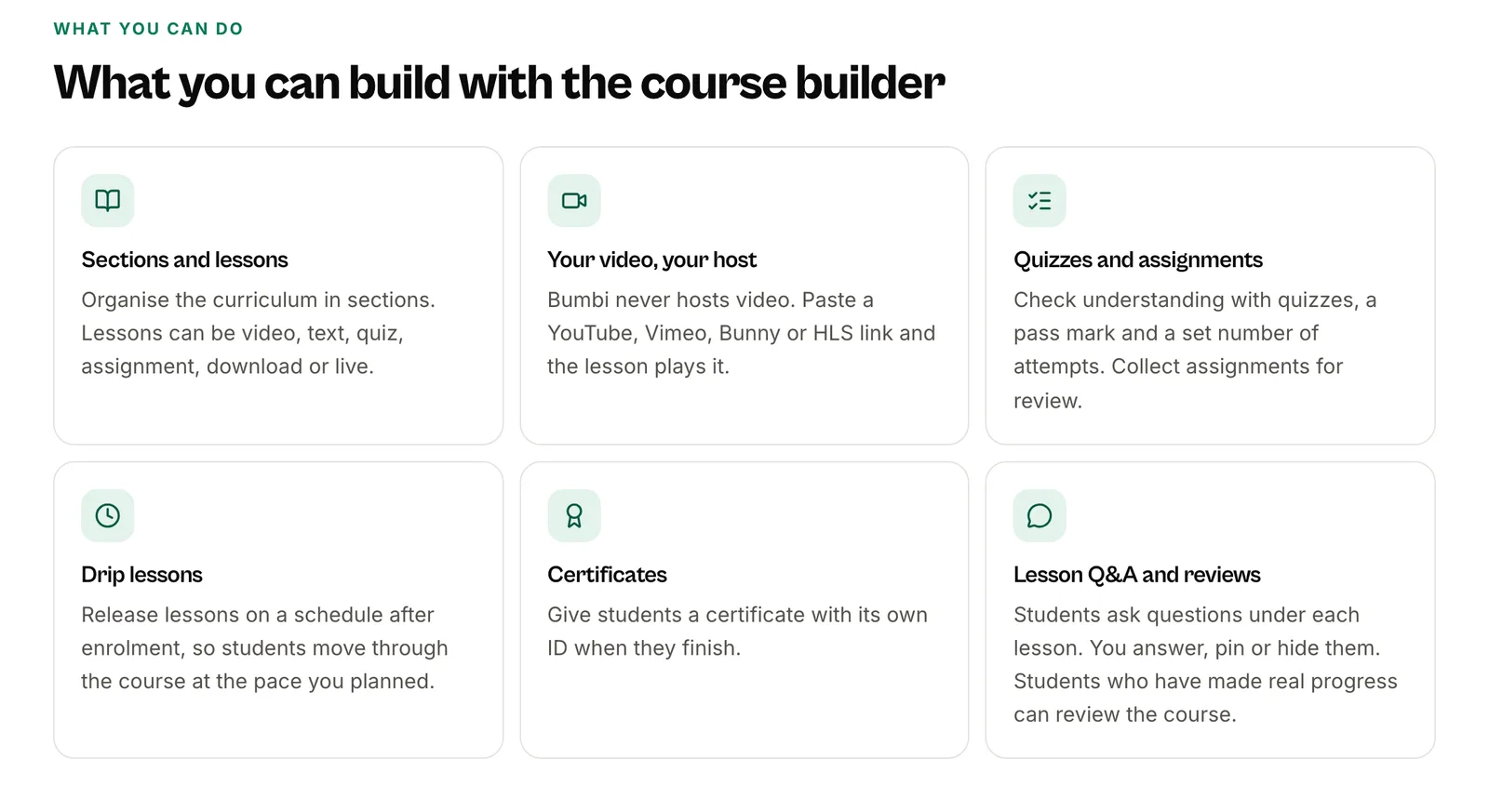
- Lessons beyond video: quizzes, assignments, downloads and live sessions.
- Drip and certificates if your course needs them.
- Selling tools built in: webinars, sales pages, reminders and messaging, so you are not stitching five tools together.
If you are comparing course tools, see Teachable vs Bumbi and Kajabi vs Bumbi, and check each site for its current features.
How to sell courses online with Bumbi
- Build the course in Bumbi Courses. Add sections and lessons: video lessons from YouTube, Vimeo, Bunny or an HLS link (Bumbi never hosts your video), text lessons, quizzes, assignments, downloads and live lessons.
- Set the pace. Release lessons straight away, a number of days after a student enrols, or on a set date.
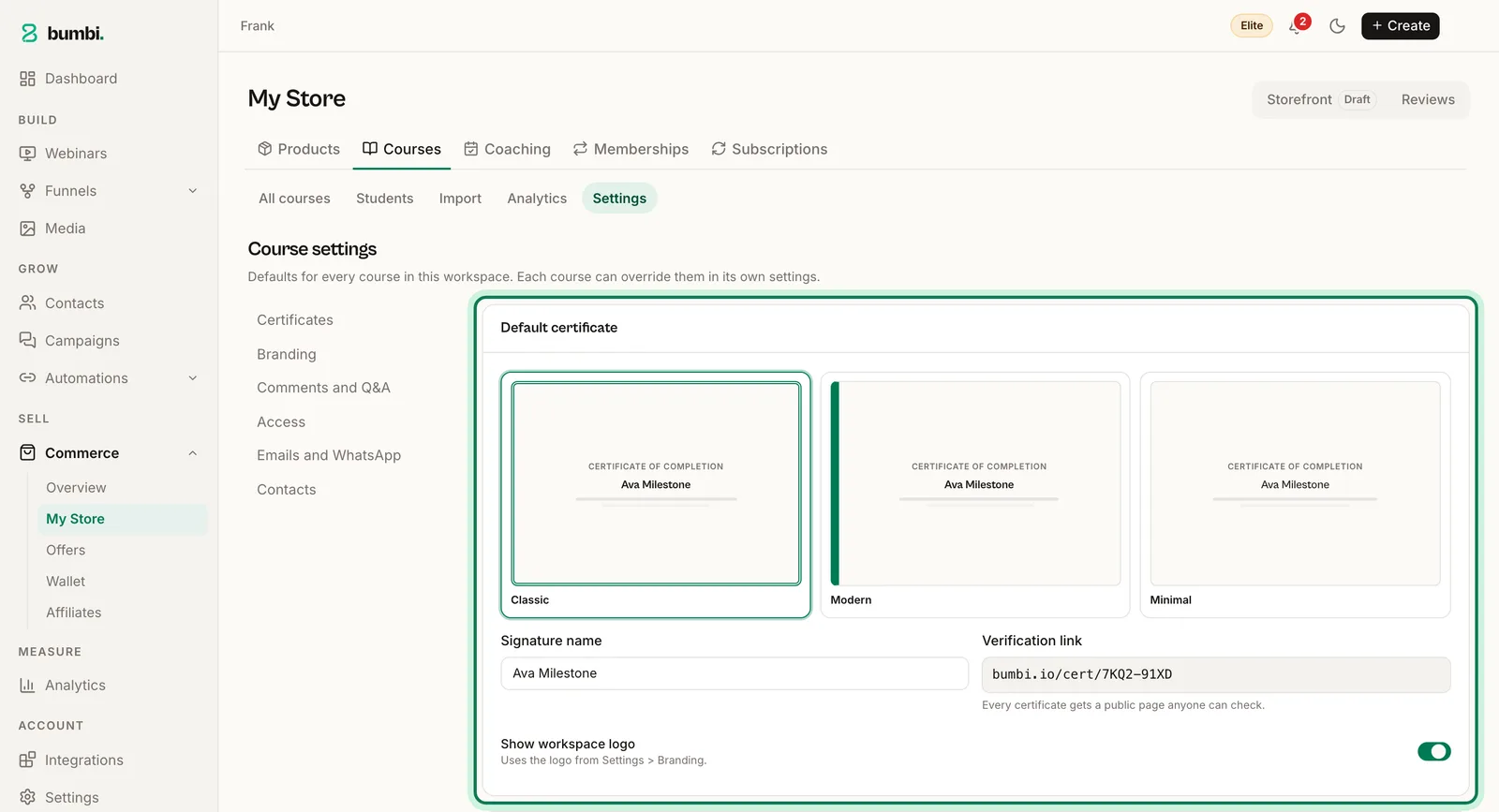
- Turn on certificates for students who finish all lessons or pass the quizzes.
- Link the course to a product. The product gets a checkout link, and every paid order enrols the student automatically. Buyers in other countries pay in their own currency where supported.
- Sell it with the tools around it: a webinar you record once that runs as scheduled live sessions, a VSL page, an order bump at checkout, and checkout reminders for people who start paying and leave.
- Bundle it into a membership if you want monthly or yearly access with other benefits.
Mistakes that slow course sales
- Recording everything before selling once. Pre-sell, then record with real students in mind.
- A course about a topic, not a result. Rewrite the promise until a stranger understands it in one line.
- No practice. Students who only watch rarely finish, and students who do not finish rarely leave good reviews.
- Selling only on launch day. An automated webinar or a VSL keeps selling every week.
Your course can enrol students while you teach the next one. Start selling on Bumbi and build it in Bumbi Courses today.
Frequently asked questions
- How do I sell courses online?
- Package one clear result into a short course, price it on that result, and put it behind a checkout that enrols students automatically. Then sell courses online by teaching first, through a free lesson, a webinar or a short video.
- How much should I charge for an online course?
- Price on what the result is worth to the student. Short skill courses can be priced low, complete programs much higher, and a tier with group calls or feedback can sit above both.
- What online courses are in demand?
- Courses that solve near-term problems: getting a job, earning more, passing an exam, running a small business or learning a tool for work. Your audience's repeated questions are the best guide.
- Do I need to host my own course videos?
- On Bumbi, you link video lessons from YouTube, Vimeo, Bunny or an HLS stream. Bumbi does not host video files itself.
- Can students get access automatically after paying?
- Yes. In Bumbi Courses, you link the course to a product, and every paid order enrols the buyer in the course.
- Can I release lessons over time?
- Yes. Lessons can open straight away, a set number of days after a student enrols, or on a specific date.
- What is Bumbi?
- Bumbi is a platform for creators who sell digital products: ebooks, courses, templates and presets. Bumbi Courses adds lessons, quizzes, assignments, certificates and automatic enrolment from your checkout.

Written by
Ava Milestone
Ava writes the Bumbi guides on selling digital products.
Start Doing More With Bumbi Funnels
Now you can simply build better pages, create better funnels and make more sales online
Related
Video Sales Letter: What a VSL Is, a Script and an Example
A video sales letter sells in the order you choose. Here is the 7 part script, a worked example and how to publish a VSL page that converts.
Bulk WhatsApp Messages: How to Send Safely to Your Own Buyers
What WhatsApp allows, why bulk senders get numbers blocked, and how sellers reach every buyer safely from their own number.
How to Build a Membership Website Without Code
What a membership site is, the types that work for creators, how to price it, and how to build one with renewals and access handled for you.