 Bumbi
Digital Product Business: How to Start One, Step by Step
No stock, no shipping, no warehouse. Here is how to start a digital product business, from the first idea to the second product.
Quick answer: A digital product business sells things buyers download or access online, like ebooks, templates, courses, presets and memberships, instead of physical goods. To start one, pick a narrow audience and a problem you can solve, make a small first product, set up a checkout with automatic delivery, and build one reliable way for buyers to find you before adding more products.
There is no stock to buy, no warehouse, no shipping, and every extra copy costs you almost nothing to deliver. That is why so many people start a digital product business on the side, with a laptop and an evening a week.
What separates a business from a one-off sale is the system around the product: who it is for, how people find it, how they pay, how they get it, and what you sell them next. This guide walks through how to start a digital product business step by step, from the first idea to the second product.
What is a digital product business?
A digital product business makes money by selling products that exist as files or online access. The product is made once and sold many times. The main costs are your time to make it, the tools you use, and the effort to bring buyers to it.
Common examples: a designer selling Canva templates, a fitness coach selling a 12 week program as a course, a photographer selling presets, an accountant selling spreadsheet templates for small businesses, a teacher selling printable worksheets.
How to start a digital product business, step by step
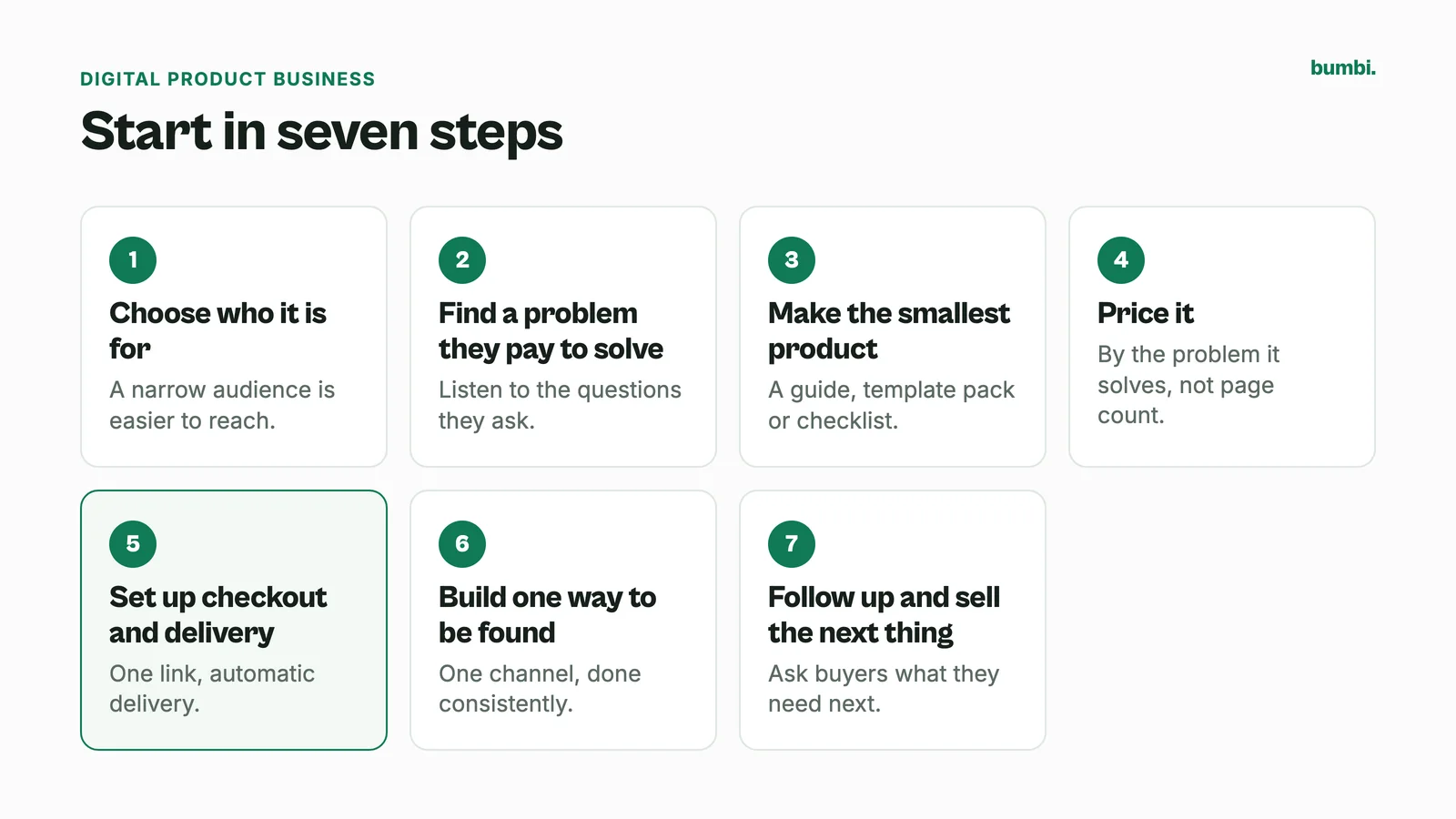
1. Choose who it is for
"Everyone who wants to get fit" is not an audience. "New mothers who want 20 minute home workouts" is. A narrow audience is easier to reach, easier to write for, and easier to sell to again.
2. Find a problem they will pay to solve
Look at the questions people already ask you, in comments, DMs and WhatsApp. If three people asked the same thing this month, that is a product.
3. Make the smallest product that solves it
Your first product should be quick to make and easy to explain: a guide, a template pack, a checklist, a short course. You learn more from selling a small product than from planning a big one. How to create digital products covers the making part.
4. Price it
Price by the problem it solves. A spreadsheet that saves a business owner a day of work every month is worth more than its page count. Start where you can explain the value honestly, then adjust once you have sales and reviews.
5. Set up checkout and delivery
Every product needs a checkout link and automatic delivery. If you deliver by hand, you will be the bottleneck as soon as sales pick up, and buyers at night will wait until morning.
6. Build one way for buyers to find you
Pick one channel and do it well before adding others: short videos, YouTube, a WhatsApp list, search, or partners who promote you. Consistency beats variety at the start.
7. Follow up and sell the next thing
Your best future buyers are your current ones. Follow up, ask what they need next, and make that your second product.
What digital products are in demand?
Demand follows problems that never go away: making money, saving time, health, relationships, learning a skill, organizing life. Products that do well tend to be specific, practical and quick to use: templates, planners, step by step guides, short courses, presets, and done-for-you resources. See digital product ideas for a long list grouped by skill.
What is the easiest digital product to sell?
The one your audience already asks you for. Beyond that, products with an obvious before and after (presets, templates, planners) are easy to show in a post, and that makes them easier to sell than abstract products like coaching.
Do I need a registered company to sell digital products?
It depends on where you live and how much you sell. Many people start as individuals and register a business once sales grow. Rules on tax and registration differ by country, so check your local requirements or speak to an accountant. Whatever you do, keep a simple record of every sale from day one.
The digital product seller's toolkit
You need fewer tools than you think:
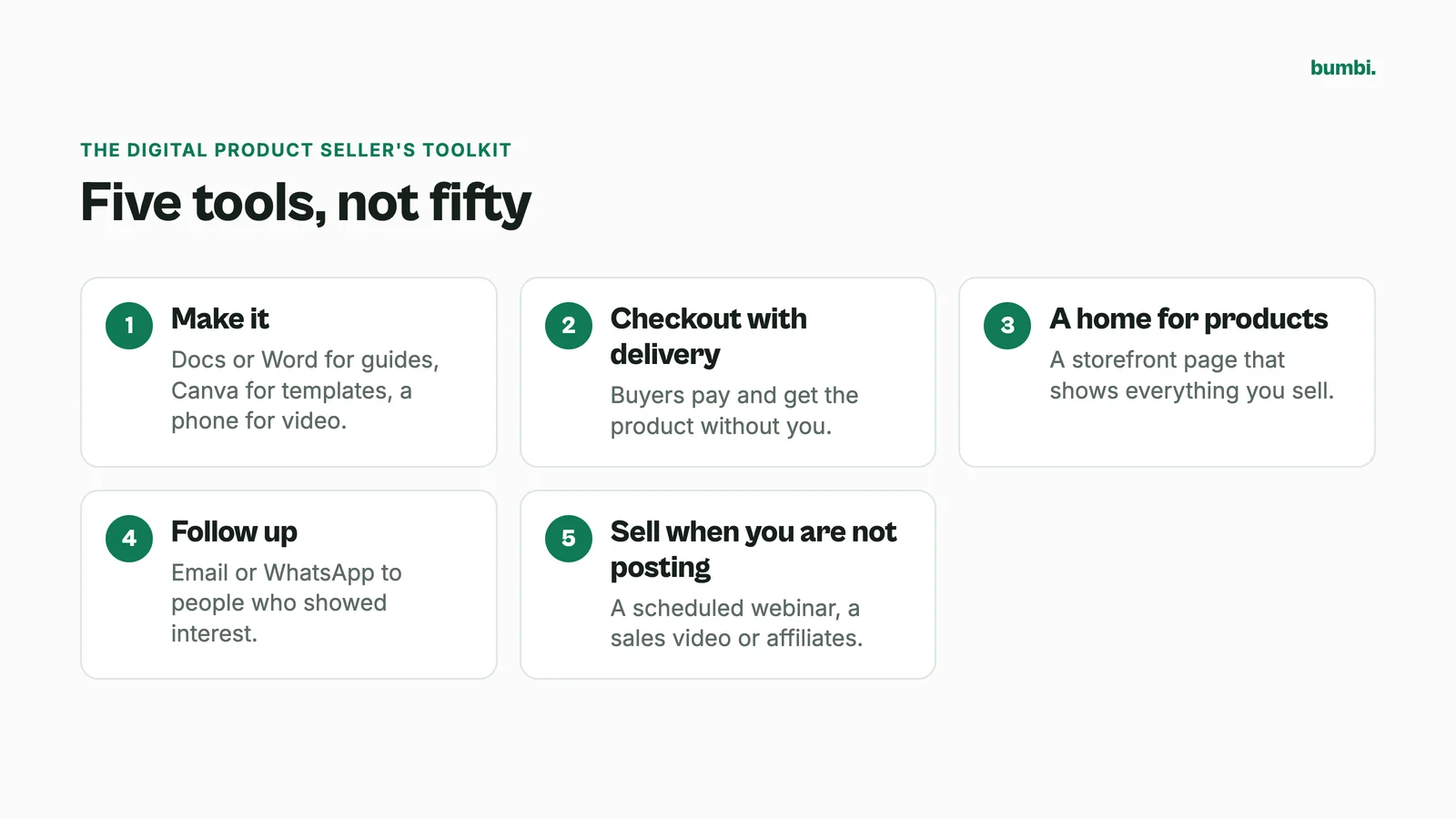
- A tool to make the product: Google Docs or Word for guides, Canva for templates and planners, a phone for video.
- A checkout with automatic delivery, so buyers pay and get the product without you.
- A home for your products, like a storefront page, so people can see everything you sell.
- A way to follow up, by email or WhatsApp, with people who showed interest.
- Something that sells while you are not posting: a webinar on a schedule, a sales video, or affiliates.
Running your digital product business on Bumbi
Bumbi is a platform for creators who sell digital products, with the sales tools around it in one place:
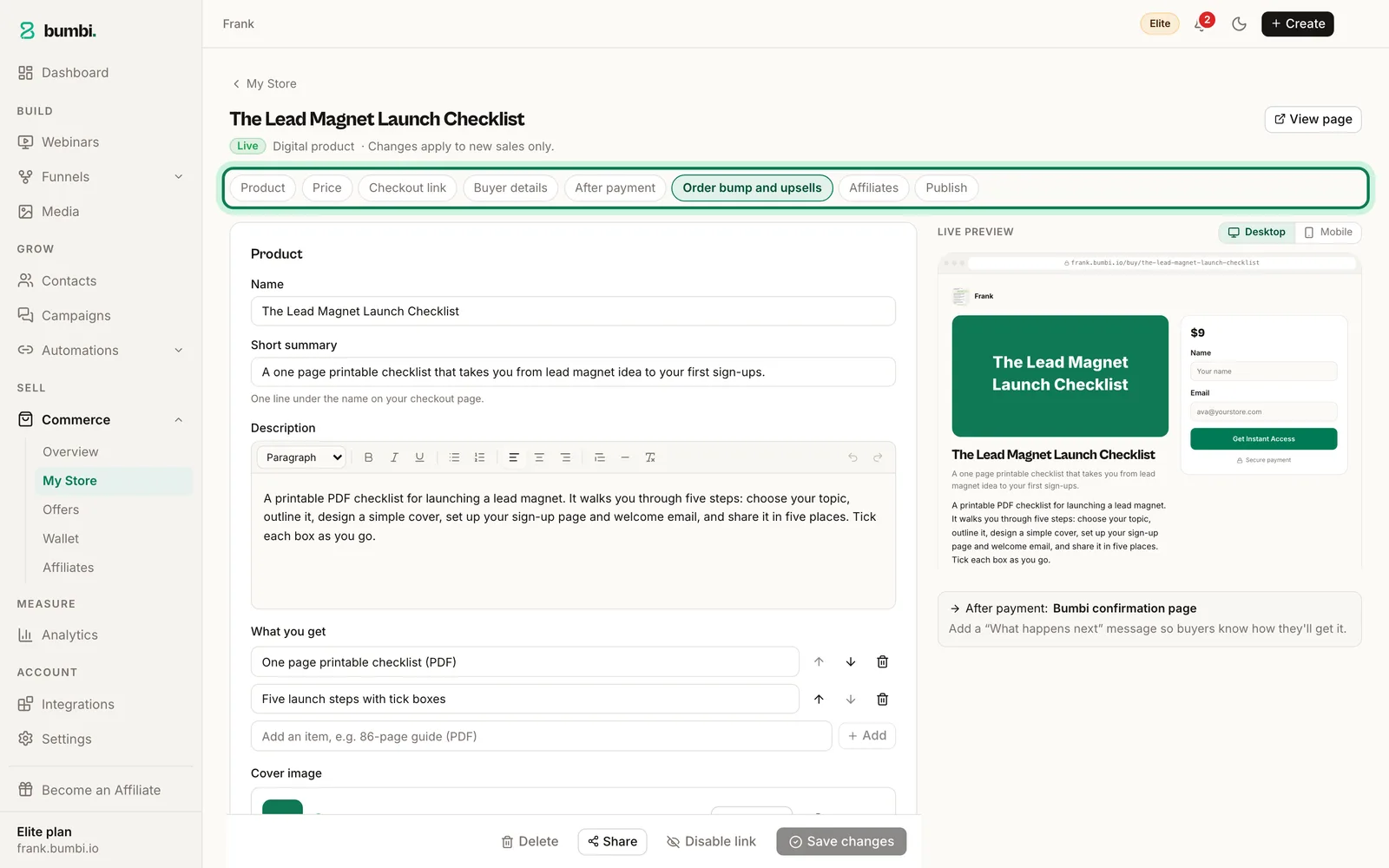
- Products and checkout. Every product gets one checkout link, delivery is automatic, and buyers keep their purchases in a library at bumbi.io/access.
- Buyers anywhere. Buyers in other countries see and pay in their own currency where supported.
- A storefront with all your products and verified reviews.
- More per sale. Order bumps on the checkout, and automatic checkout reminders when someone stops before paying.
- More product types as you grow: courses, memberships and subscriptions, and coaching bookings.
- Selling tools: webinars that run your recording on a schedule, video sales letter pages, landing pages, WhatsApp follow-up from your own number, and affiliates who promote your products.
You can start on the Free plan and move up as you grow. See pricing for what each plan includes.
Mistakes that stall a new digital product business
- Building for months before selling. Sell a small version first.
- Too broad an audience. If your product is for everyone, your posts speak to no one.
- Ten channels at once. Master one way of getting found before adding more.
- Ignoring past buyers. They already trust you. Ask them what to make next.
- Manual delivery. It does not scale, and it makes buyers wait.
For the full selling playbook, read how to sell digital products.
Start your digital product business today. Create your free Bumbi account and publish your first product.
Frequently asked questions
- What is a digital product business?
- A digital product business sells products that exist as files or online access, like ebooks, templates, courses, presets and memberships. Each product is made once and sold many times.
- How do I start a digital product business?
- Choose a narrow audience, find a problem they will pay to solve, make a small first product, set up a checkout with automatic delivery, and build one reliable way for buyers to find you.
- What is the easiest digital product to sell?
- The one your audience already asks you for. Products with a clear before and after, like presets, templates and planners, are also easy to show and sell.
- Do I need a registered company to sell digital products?
- It depends on your country and how much you sell. Many people start as individuals and register once sales grow. Check your local rules or ask an accountant.
- What does a digital product seller need to get started?
- A tool to make the product, a checkout with automatic delivery, a page that shows your products, a way to follow up, and one channel where buyers find you.
- What is Bumbi?
- Bumbi is a platform for creators who sell digital products: ebooks, courses, templates and presets. It gives a digital product business checkout, delivery, a storefront and sales tools in one place.

Written by
Ava Milestone
Ava writes the Bumbi guides on selling digital products.
Start Doing More With Bumbi Funnels
Now you can simply build better pages, create better funnels and make more sales online
Related
Video Sales Letter: What a VSL Is, a Script and an Example
A video sales letter sells in the order you choose. Here is the 7 part script, a worked example and how to publish a VSL page that converts.
Bulk WhatsApp Messages: How to Send Safely to Your Own Buyers
What WhatsApp allows, why bulk senders get numbers blocked, and how sellers reach every buyer safely from their own number.
How to Build a Membership Website Without Code
What a membership site is, the types that work for creators, how to price it, and how to build one with renewals and access handled for you.