 Bumbi
Best Platform to Sell Digital Products: A 7 Point Scorecard
Seven questions that decide whether a platform will actually make you sales, how Bumbi answers each, and where to compare the rest.
Quick answer: The best platform to sell digital products is the one your buyers can actually pay on, that delivers the file the moment they pay, and that helps you follow up with people who did not buy yet. Check those three things before you look at anything else, then compare design, tools and price.
Search for the best place to sell digital products and you get lists of twenty names, each with a star rating and a paragraph that sounds the same. The trouble is that most of those lists rank tools on features that do not decide whether you make a sale.
This guide gives you the scorecard we use, explains why each line matters, shows how Bumbi answers each one, and points you to honest side by side comparisons for the other names you will see.
What makes the best platform to sell digital products?
Before you open a single pricing page, write down three facts about your business:
- Where your buyers live and how they normally pay.
- What you sell: a file, a course, a monthly membership, booked calls, or a mix.
- Where your buyers find you: Instagram, TikTok, WhatsApp, YouTube, email, ads.
Now use the scorecard below. A platform that fails line 1 or 2 is the wrong platform, however pretty its templates are.
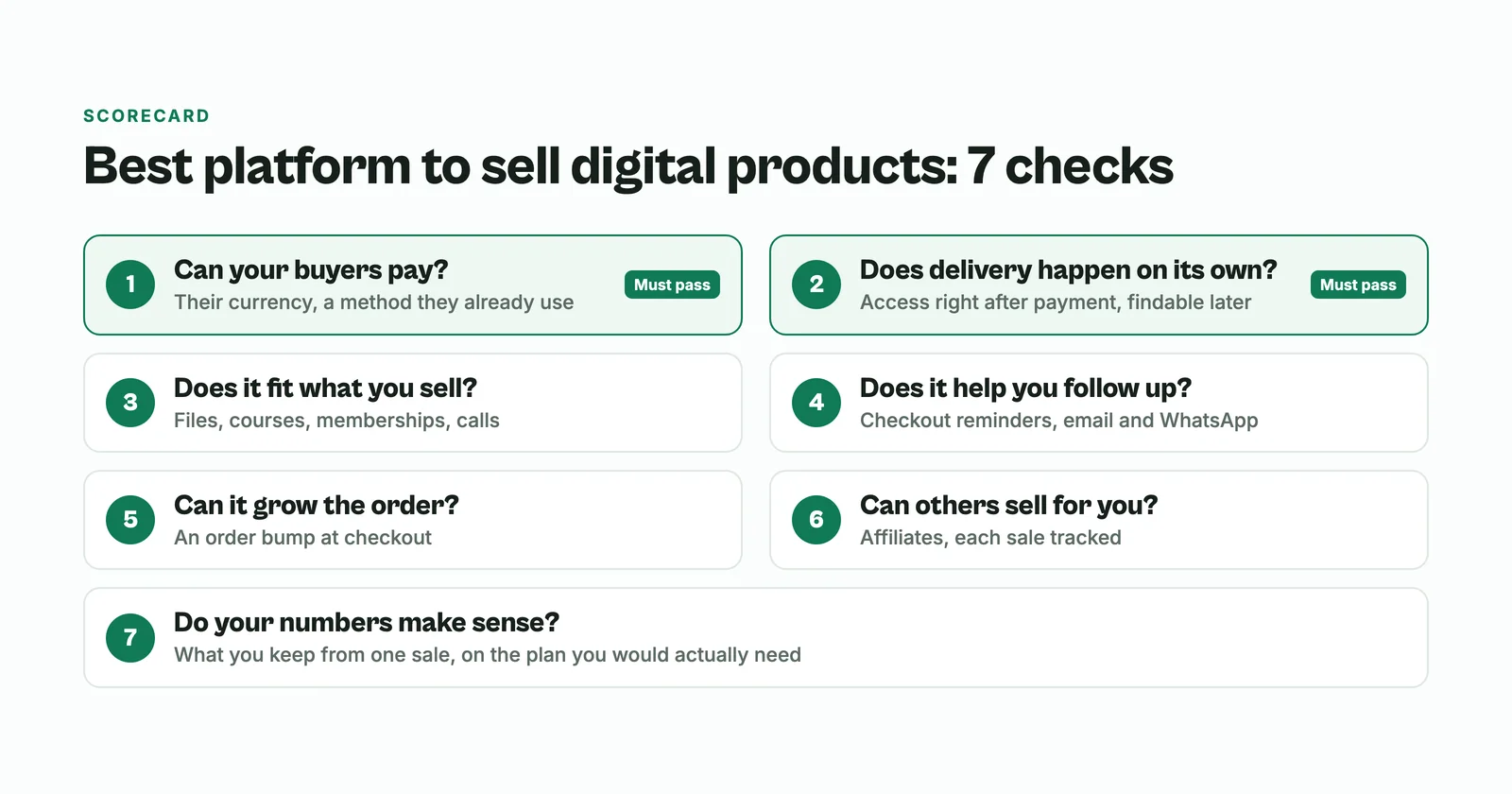
The 7 point scorecard for a digital product selling platform
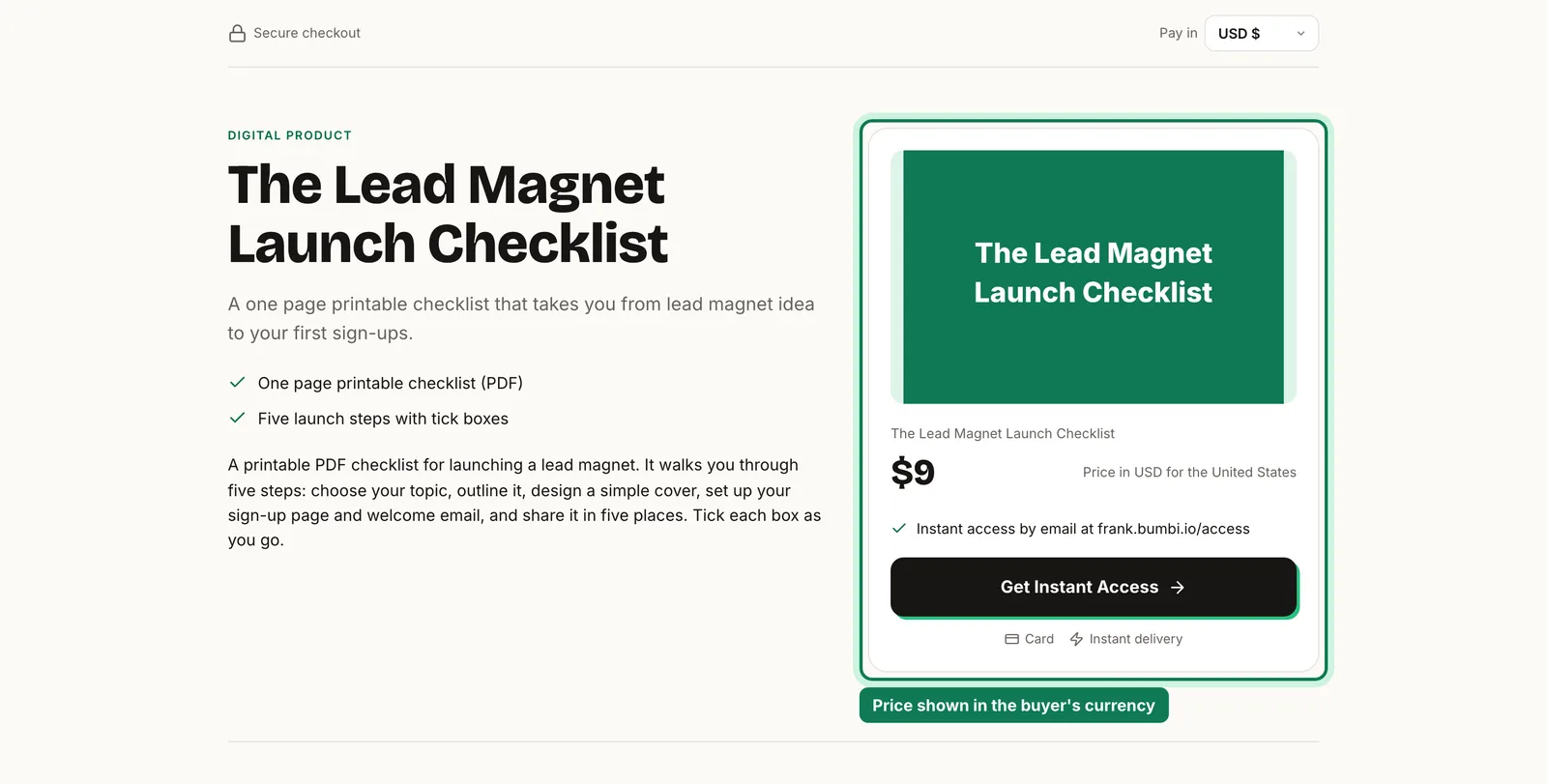
- Can your buyers pay? In their own currency, with a method they already use. A buyer who sees a foreign price or a card form they cannot fill will leave.
- Does delivery happen on its own? The file or access should arrive right after payment, and the buyer should be able to find it again later without emailing you.
- Does it fit what you sell? Files, courses, memberships and coaching calls each need different things. Moving platforms later is painful, so check for the products you plan to sell next year too.
- Does it help you follow up? Reminders for people who started checkout and left, plus email or WhatsApp messages after someone joins your list.
- Can it grow the order? Something like an order bump, a small add-on the buyer can tick at checkout.
- Can others sell for you? Affiliates who share your link, with each sale tracked to them.
- Do your numbers make sense? Read the pricing page carefully and work out what you keep from one sale at your real price, on the plan you would actually need.
Line 7 is deliberately last. A cheap platform your buyers cannot pay on costs you more than a paid one they can.
How Bumbi scores on each line
We built Bumbi for creators who sell digital products, so here is the straight answer on each line of the scorecard.
| Scorecard line | Bumbi |
|---|---|
| 1. Buyers can pay | Buyers in other countries see and pay in their own currency where supported |
| 2. Automatic delivery | Files delivered after payment, and every purchase kept in the buyer's library at bumbi.io/access |
| 3. Fits what you sell | Files, courses with quizzes and certificates, memberships and subscriptions, coaching and booking pages |
| 4. Follow up | Checkout reminders sent automatically, plus WhatsApp automations from your own number |
| 5. Bigger orders | Order bumps on every store |
| 6. Others sell for you | Affiliates promote your products, and each sale is tracked to them |
| 7. Your numbers | A Free forever plan and paid plans, listed on pricing |
On top of the scorecard, Bumbi includes a storefront with verified reviews, webinars you record once that run as scheduled live sessions, video sales letter pages, landing pages (templates, a visual builder, or HTML you paste in), and your Meta Pixel connected in Integrations for anyone running ads.
Best website to sell digital products vs a marketplace
People searching for the best website to sell digital products are often choosing between two models.
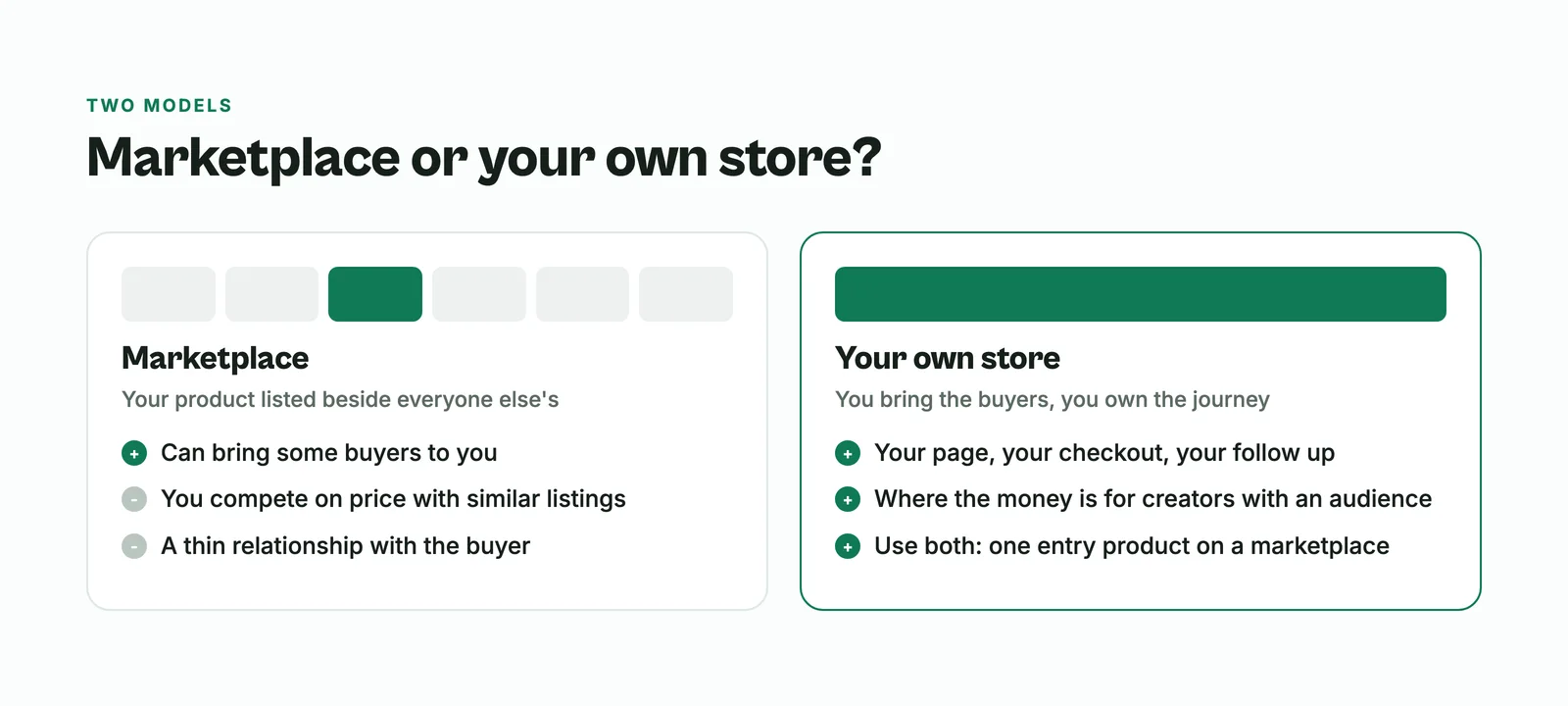
- A marketplace lists your product next to everyone else's. It can bring some buyers to you, but you compete on price with similar listings, and your relationship with the buyer is usually thin.
- Your own store on a selling platform means you bring the buyers, and in return you own the page, the checkout and the follow up. For most creators with an audience on social media, this is where the money is.
You can use both. Some sellers list one entry product on a marketplace for discovery and send everything else to their own store.
Other platforms people compare, and where to check them
You will see these names in every list. Features and prices change often, so check each site directly for what it offers today. If you want a line by line look at how each compares to Bumbi, we keep comparison pages:
- Selar vs Bumbi
- Gumroad vs Bumbi
- Stan Store vs Bumbi
- Mainstack vs Bumbi
- Nestuge vs Bumbi
- Kajabi vs Bumbi and Teachable vs Bumbi, for course sellers
- systeme.io vs Bumbi, for sellers who want funnels
The full list lives on the compare page. Run each one through the same 7 point scorecard and the choice usually becomes obvious.
Mistakes people make when choosing
- Choosing on templates. A beautiful store that buyers in your main market cannot pay on is a beautiful empty store.
- Only planning for today. If you sell an ebook now and want a course or a membership next year, check that now.
- Ignoring follow up. Many people need a reminder before they buy. A platform with no reminders and no messaging leaves those sales behind.
- Not testing as a buyer. Buy your own product on the platform from your phone before you launch. You will spot problems in two minutes.
How to start on Bumbi in 10 minutes
- Create your free account and add your first product.
- Upload the file or add the link buyers should get after payment.
- Set your price once. Buyers abroad see their own currency where supported.
- Copy your checkout link and share it. Then switch on WhatsApp follow up when you are ready.
New to all of this? Start with the full guide on how to sell digital products.
Score your options, then test the one that passes. Start selling on Bumbi free and buy your own product from your phone today.
Frequently asked questions
- What is the best platform to sell digital products?
- The best platform to sell digital products is one your buyers can pay on in their own currency, that delivers the product automatically, and that helps you follow up. Bumbi was built around those three things.
- Where is the best place to sell digital products?
- If you already have an audience on social media or WhatsApp, your own store on a selling platform usually works best, because you keep the buyer relationship. A marketplace can add discovery for an entry product.
- Which platform is best to sell ebooks?
- Use the same scorecard: buyers can pay, the PDF arrives automatically, and you can follow up. Our guide on how to sell ebooks walks through the full setup.
- Do I need my own website to sell digital products?
- No. A checkout link and a storefront are enough to start. You can add landing pages or a page on your own domain later.
- How do I compare platforms fairly?
- Run each one through the same seven questions, read its current pricing page, and buy a test product from your phone. Features and prices change, so check each site directly.
- What is Bumbi?
- Bumbi is a platform for creators who sell digital products: ebooks, courses, templates and presets. It combines checkout, automatic delivery, a storefront, memberships, courses and WhatsApp follow up in one account.

Written by
Ava Milestone
Ava writes the Bumbi guides on selling digital products.
Start Doing More With Bumbi Funnels
Now you can simply build better pages, create better funnels and make more sales online
Related
Video Sales Letter: What a VSL Is, a Script and an Example
A video sales letter sells in the order you choose. Here is the 7 part script, a worked example and how to publish a VSL page that converts.
Bulk WhatsApp Messages: How to Send Safely to Your Own Buyers
What WhatsApp allows, why bulk senders get numbers blocked, and how sellers reach every buyer safely from their own number.
How to Build a Membership Website Without Code
What a membership site is, the types that work for creators, how to price it, and how to build one with renewals and access handled for you.